
The Old School System Isn’t Working for Every Family Anymore
More families than ever are asking the same question this year: Is online school actually the smarter choice for us?
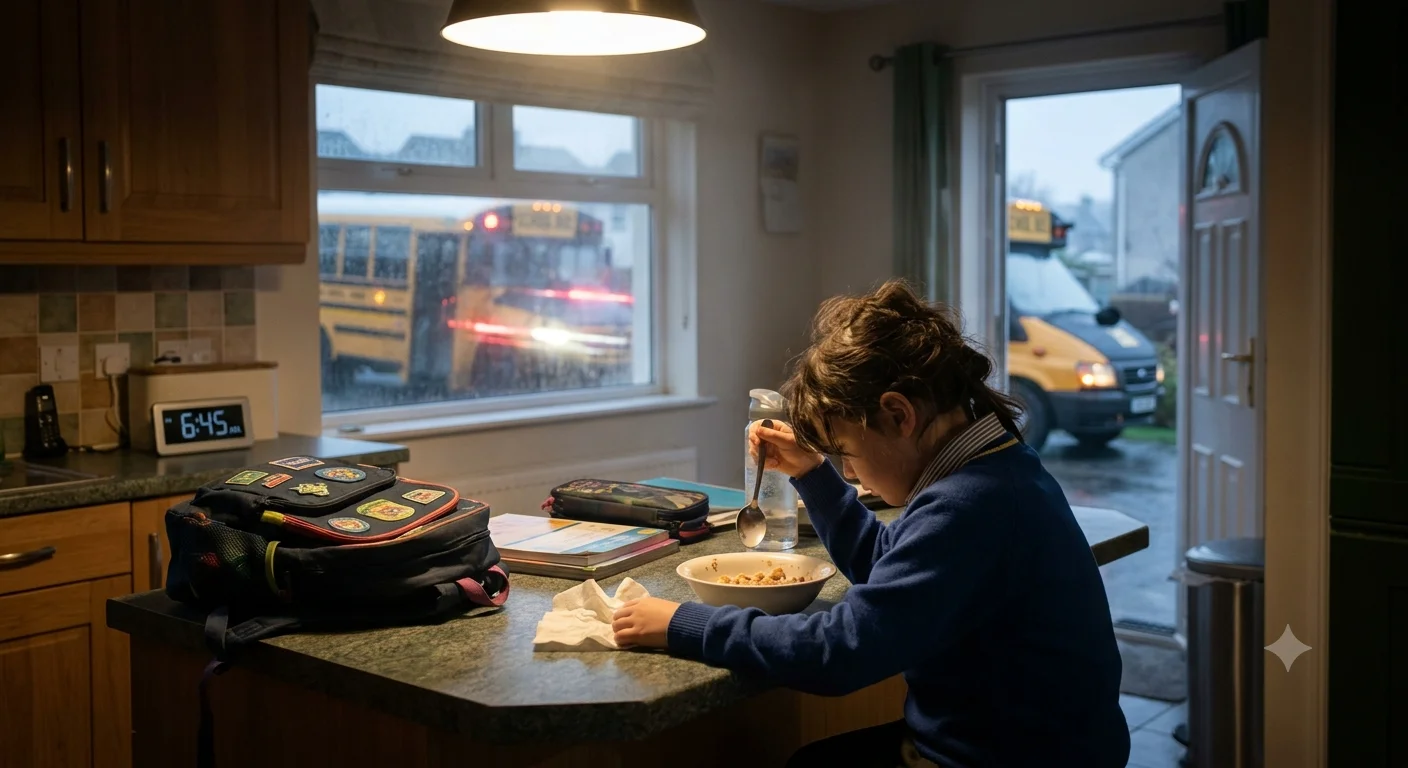
Picture this. It’s 6:45 AM. Your child is half-asleep, forcing down breakfast, rushing to catch a school van that leaves in ten minutes. By the time the class actually starts, he has already spent an hour and a half on logistics that has nothing to do with learning.
This is old school, literally and figuratively. The traditional model was built for a different era, when families lived close to their schools, when both parents weren’t juggling jobs across time zones, and when “one classroom, one pace, one teacher for thirty kids” was simply the only option available.
That’s no longer true. Families today are scattered across cities and continents. The parents are asking sharper questions:
Is my child actually learning, or just attending?
Is this curriculum preparing them for a global future, or just keeping a seat warm until 3 PM?
Data from the National Center for Education Statistics shows that public school enrollment in the U.S. dropped by more than 1.2 million students between 2019 and 2023, while homeschooling and online enrollment options grew substantially in the same window. That’s not a blip. That’s a signal.
What Happens When Families Stick With a System That No Longer Fits
Here’s where it gets uncomfortable. When families stay in a system that isn’t built for them, the cracks start showing in ways that are easy to miss at first and hard to ignore later.
Time Lost to Travel
Hours lost every week to travel in time that never comes back. For overseas families, expat households in developed countries, or parents managing multiple children in different grades, this isn’t a minor inconvenience; it reshapes the entire day around logistics instead of learning.
Rigid timetables
Traditional schools run on one fixed schedule for everyone. If a family needs to travel, if a child is unwell for a few days, or if parents work different shifts, the school day does not adjust. Families are forced to fit their lives around the school, not the other way around.
The one-size-fits-all pace
A classroom of 30 students moves at one speed. If your child is ahead, they get bored. If they’re behind, they get left behind, often without anyone noticing until report card day. The data backs this up. A McKinsey & Company analysis of pandemic-era learning found that, on average, U.S. students were half a school year behind in math, with the losses hitting hardest among historically disadvantaged and lower-income students, who often lacked access to individualized academic support. That gap is exactly what a fixed-pace, one-size-fits-all classroom struggles to close.
Bullying and safety concerns
Many parents worry about what happens outside the classroom, in hallways, on school buses, or during unsupervised breaks. Physical safety and emotional safety are both real concerns, and in a large school it is hard for staff to monitor every interaction.
Limited teacher access
In a class of 30 or more, one teacher cannot give each child individual attention. Questions go unanswered until the next class. Struggling students often do not get help until a problem becomes serious
The missing piece: values and identity
For many Muslim families, especially those raising children abroad, there’s an added layer of concern: will my child grow up disconnected from their faith and identity because the school day has zero room for it? Tarbiyah and Islamic Education aren’t electives you can bolt on over the weekend. If they’re not woven into the daily rhythm, they quietly disappear.

higher cost Every Year
Between transport, uniforms, supplies, and rising private school tuition, the old school becomes more expensive without a proportional increase in quality or flexibility.
None of this means traditional school is “bad.” It means it’s a fixed model in a world that’s stopped being fixed. And more families are noticing the mismatch every year.
Why Online School Is Becoming the Default, Not the Backup
This is where the shift is happening, and it is not a fringe trend anymore. Online school has moved from “emergency alternative” to “first choice” for a growing number of families. Here are the top four reasons why.
Flexibility That Actually Matches How Families Live Today
Online school removes the fixed geography and fixed clock that traditional schooling depends on. A family in Toronto, a family in Dubai, and a family in Lahore can all enroll their children in the same academic program without anyone relocating or commuting.
This matters most for families who move frequently, who have kids in different time zones, or who simply want school to fit into life instead of life being rearranged around school. Institutions like Khan Academy proved a decade ago that structured, high-quality learning doesn’t require a physical building; it requires good content, consistent delivery, and a system that adapts to the learner.
Parents researching “when does K12 online school start” or comparing “best online learning platforms” are usually at this exact decision point; they’ve already accepted that flexibility is non-negotiable, and now they’re comparing who delivers it best.
Individualized Pace and Real Academic Rigor
The classroom-of-30 problem disappears when class sizes shrink, and instruction can adjust to the student instead of the average. Cambridge and Oxford-aligned curricula, along with IGCSE pathways, give families a globally recognized academic standard, the same one respected by universities worldwide, without requiring a physical seat in a specific country.
This isn’t just theory. Case in point: Cambridge International reports that over 10,000 schools in more than 160 countries currently offer its programmes and qualifications, with nearly a million learners preparing for their future through a Cambridge education every year. A curriculum built for that kind of global scale was never meant to require a specific classroom in a particular country, and that’s exactly the flexibility online delivery is now built to match.
This individualized advantage shows up most clearly at exam-stakes moments. In Best Online Tuition for O Level Students, we break down exactly how one-on-one and small-group online support helps students close gaps a crowded classroom simply doesn’t have room to address.
For families exploring options beyond K-12 basics, the online model scales up too. Prestigious institutions like the London School of Economics now offer free online courses to the public, and platforms host everything from free online drawing courses for younger kids exploring creativity to online nursing school programs for adults planning a career shift. The infrastructure for serious, credentialed online learning has already been built; families are just catching up.

Room for Identity, Values, and Character, Not Just Content
This is the piece traditional schools structurally struggle with, especially for Muslim families raising children outside Muslim-majority countries. A rigid six-hour school day built entirely around secular content leaves no real space for Islamic Education or Tarbiyah unless a family adds it on top, usually on evenings and weekends when everyone is already tired.

Online school changes that equation. When a school is built from the ground up to include Islamic Education and character development alongside Cambridge and IGCSE academics, values aren’t an add-on; they’re part of the same school day. That’s a structural difference, not a cosmetic one, and it’s a major reason families are actively searching for alternatives to conventional schooling rather than settling for what’s geographically nearest.
Lower Cost, Higher Access
Online school typically removes transport costs, uniform costs, and many of the facility fees baked into private school tuition, while still delivering internationally benchmarked academics. For families in Pakistan paying in local currency, or families abroad managing multiple children’s education budgets, this cost structure often makes the difference between “we’ll manage one child’s private schooling” and “we can properly educate all our children.”
It also opens the door wider. A family that couldn’t previously access a Cambridge-curriculum school because none existed within driving distance can now enroll from their living room. The scale of that shift is hard to overstate. According to UNESCO, more than 1.6 billion learners in over 190 countries were out of school at the peak of the pandemic, the single largest disruption to education in modern history. That moment forced remote and online learning out of the “nice-to-have” category and into the mainstream almost overnight. Many families never fully went back to the old model, and that lasting shift is a big part of why online school is no longer seen as a backup plan; it’s a first choice.
Safety and a Controlled Environment
At home, a child is not exposed to bullying, peer pressure, or unsupervised situations that can happen in hallways, playgrounds, or on school transport. Parents can see what their child is doing and who they are interacting with during school hours. This does not mean removing a child from social life. It means removing the risks that come with an environment no one is fully watching.
Parents get peace of mind. Children get a calmer, safer space to focus on learning instead of managing social stress.
Direct Teacher Support
In a small online class, a teacher can respond to a student’s question in real time instead of waiting for the next lesson. Students are not lost in a group of 30 or more. If a child is struggling with a topic, the teacher notices sooner and can adjust the lesson or offer extra help.
Fewer gaps in learning. Problems get addressed before they turn into bigger academic setbacks.
Personalized Learning
Online school allows lessons to move at a pace that fits the student, not the average of the class. A child who grasps a topic quickly can move ahead. A child who needs more time can get it without feeling rushed or left behind.
Students stay engaged instead of bored or frustrated. Progress is based on actual understanding, not the clock.
| Reason | Traditional School Challenge | Online School Benefit |
| Flexibility | Fixed schedules, daily commute | Custom pacing, fits family life |
| Personalized Learning | One-size-fits-all pace | Adaptive lessons, tailored support |
| Safety | Bullying, peer pressure | Controlled, monitored environment |
| Teacher Support | Limited access | Responsive, proactive communication |
| Academic Rigor | Standard curriculum only | Cambridge, Oxford, IGCSE pathways |
| Values & Identity | No room for faith-based learning | Tarbiyah and Islamic Education included |
| Cost | Tuition, transport, uniforms add up | Lower cost, same academic standard |
Case Study Data Highlights
Florida Virtual School survey (2026)
Survey Results (2026): Florida Families Cite Flexibility, Teacher Support as Top Reasons for Choosing Online Learning (flvs.net in Bing)
Cultural Shifts in Online Learning: Cultural Shifts and Perceptions of Virtual Education (flvs.net in Bing)
Parent Testimonials: Why We Choose Florida Virtual School for Homeschooling (flvs.net in Bing)
King’s InterHigh (UK, Middle East, Asia)
Accreditation Report (2026): Ofsted OEAS Report – King’s InterHigh
IB Diploma Programme Online: The Diploma Programme Online – 5 Takeaways (ibo.org in Bing).
SchoolMyKids (India)
Digital Learning Growth (2026): Digital Learning in India: Latest Updates & Future Growth (schoolmykids.com in Bing)
Affordable Smart Campuses: Affordable Advanced Schools and Smart Campuses Opening (schoolmykids.com in Bing)
Hybrid Learning Explained: Hybrid Learning Explained: Future of Education in India (schoolmykids.com in Bing)
How to Learn Online Without Losing Structure
A fair question families ask at this stage: “How do I learn online without it turning into unstructured screen time?” The answer is the same one that separates serious online schools from casual video platforms: structure. Live classes with real teachers, set timetables, assessments, and parent check-ins do for online school what a bell schedule does for a physical building: they create rhythm.

This is also where families sort between options. A traffic school online California program and a full K-12 online high school course are built for completely different purposes, but they share the same underlying principle: legitimate online learning has structure, accountability, and a clear curriculum, not just uploaded videos.
When comparing the best online courses or the best online learning sites, the families who end up satisfied a year later are the ones who checked for three things: a recognized curriculum, live (not just recorded) instruction, and a values framework that matches their own household, academic and personal.
If you’re still weighing which structure fits your family, Find Your Perfect Homeschooling Method: A Practical Guide for Confident Parents walks through exactly how to make that call.
Where Nisar Academy Fits
Nisar Academy was built around exactly this gap. It delivers Cambridge and Oxford-aligned, IGCSE curricula from Playgroup through O Level, fully online, with Islamic Education and Tarbiyah built into the core program rather than tacked on. Families across Pakistan, Canada, Europe, and the UAE are already using it to solve the four problems above: flexible scheduling across time zones, individualized academic pace, an intact space for faith and character development, and a fee structure that works for both group and one-to-one formats.

The families choosing online school this year aren’t lowering their standards. They’re raising them, and picking a model that can actually meet those standards without asking them to sacrifice flexibility, values, or budget to get there.